



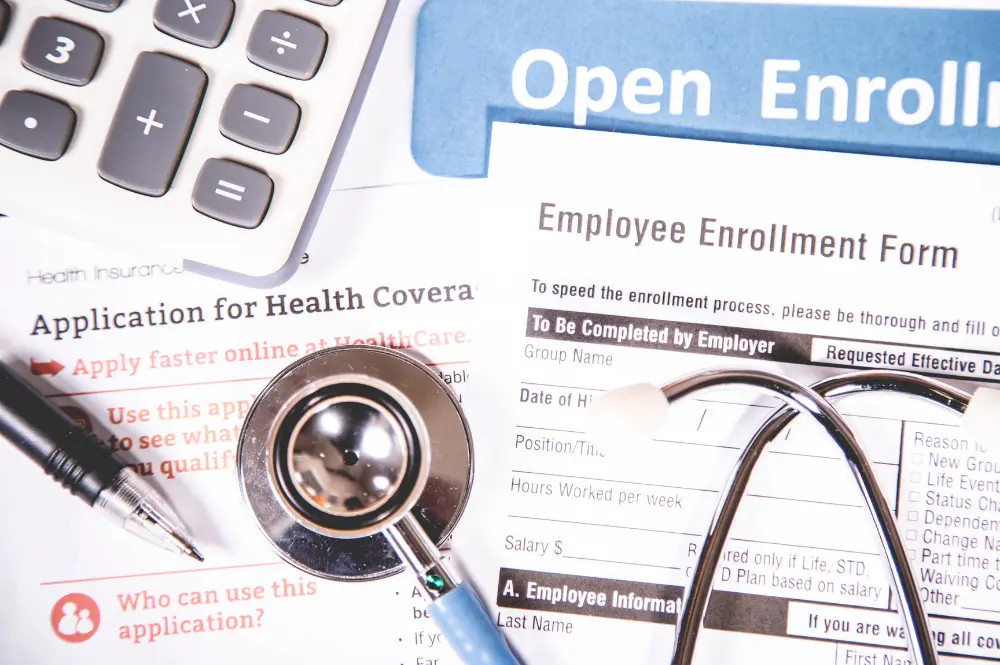
Most employees spend less than an hour deciding how to spend thousands of dollars. That is the reality of open enrollment at many companies. Materials go out, a deadline gets announced, and a large share of the workforce re-elects whatever they had last year because the alternative feels like homework.
Employers rarely intend for it to work that way. HR teams put real effort into plan design, carrier negotiations, and cost modeling. Then communication gets compressed into the two weeks before the deadline. Strong open enrollment communication changes the outcome, because the value of a benefits package depends almost entirely on whether employees understand it well enough to use it.
Key Takeaways
- Effective benefits communication works as a year-round effort rather than a two-week campaign before annual enrollment closes.
- Employees make more confident choices when benefit options are explained in plain language and tied to real life events.
- A written open enrollment checklist keeps your HR team, leadership, carriers, and outside benefits experts working from one timeline.
- Retirement plans deserve the same attention as health insurance, since health and financial security shape long-term outcomes together.
- Tracking key metrics like click through rates, employee questions, and survey feedback tells you exactly what to fix in future campaigns.
Why Poor Communication Undermines Great Benefits
The gap is rarely about effort. It is about translation.
Benefits documents are written for compliance first. Summary plan descriptions and carrier brochures exist to satisfy legal requirements, and they do that job well. They were never designed to help a 34-year-old with a new baby decide between a high-deductible plan paired with an HSA and a traditional PPO. When those documents carry the entire communication load, employees default to inertia or turn to informal sources, including coworkers who guessed wrong last year.
Information overload creates the same result as too little information. A forty-page packet sent three days before the deadline produces avoidance, not engagement. Reducing confusion usually means sending less at any one time and sending it more often.
There is also a timing problem. Benefits questions surface when people are thinking about money, which is not necessarily in late October. Someone who just had a health scare, bought a house, or watched a parent enter a nursing home is suddenly very interested in coverage, disability protection, and retirement planning. Employee benefits communication that appears once a year misses most of those moments, and the communication gap widens quietly until enrollment season exposes it again.
Start Open Enrollment Planning Earlier Than Feels Necessary
Ask experienced benefits experts when planning should begin, and the answer is usually four to six months before the deadline. That sounds excessive until you map what has to happen: renewal analysis, plan design decisions, vendor coordination, systems testing, manager training, and then actual communication to employees.
Compressing that into six weeks guarantees the education phase absorbs the delay. Build the calendar backward from your enrollment close date and protect the communication window specifically. If plan design is still unsettled in September for a January effective date, employees will feel it, and confused employees generate the support calls and mid-year change requests that follow.
Build an Open Enrollment Checklist Everyone Can See
A shared checklist does more than track tasks. It creates accountability across groups that do not report to each other, including HR, finance, payroll, carriers, brokers, and your retirement plan advisor.
A workable open enrollment checklist generally covers:
- Renewal decisions finalized and approved by leadership
- Plan comparison materials drafted in plain language and reviewed for accuracy
- A communication plan with dates, channels, and owners assigned to each key message
- Manager briefings so front-line benefits questions get consistent answers
- Live sessions scheduled, including at least one option for shift and remote workers
- Retirement plan education slotted alongside health benefits rather than after
- Confirmation process so employees know their elections were received
- Post-enrollment review of participation data, employee feedback, and unanswered questions
Keep it visible. A checklist buried in one person’s inbox coordinates nobody.
Write for the Kitchen Table, Not the Compliance File
The single biggest improvement most employers can make to their employee benefits communication strategy is replacing insurance vocabulary with household language.
Deductible, coinsurance, and out-of-pocket maximum are precise terms, and employees still misuse them constantly. Rather than defining each one in isolation, walk through scenarios. Show what a single employee with one annual physical actually pays under each plan. Then a family with a planned surgery. Then someone managing a chronic condition with monthly prescriptions. People recognize themselves in examples far faster than they absorb definitions, and that recognition is what turns benefits information into actual decision making.
The same approach applies to what employees routinely overlook. Health savings accounts get treated as a checking account for medical bills when they function as one of the most tax-efficient savings vehicles available, offering a deduction going in, tax-free growth, and tax-free withdrawals for qualified expenses. Preventive care is often fully covered and rarely used. Disability coverage gets skipped because it feels remote. Life insurance elections get made without any reference to what the household would actually need. Clear communication that connects each election to a concrete financial consequence produces better results than any amount of redesigned formatting.
Use Multiple Channels to Meet Employees Where They Are
A single all-company email is not a communication strategy. Attention is fragmented, schedules differ, and one message sent once reaches a fraction of the people who need it.
Layer the approach. Email for documentation and links. A short recorded webinar for anyone who cannot attend live. A one-page comparison sheet simple enough to stick on a refrigerator. Text or app notifications to remind employees of deadlines when the workforce is largely mobile. Manager talking points so the person employees actually trust can answer basics correctly. Digital tools including decision-support calculators help, though they work best paired with a human who can interpret the output.
Distributed workforces need deliberate accommodation. Remote employees miss hallway conversations and break room posters entirely. Manufacturing employees and other shift-based teams may have no reliable computer access during the workday, which makes printed materials, on-site sessions across multiple shifts, and text reminders more effective than another portal login. One on one conversations remain the highest-value channel for anyone facing a complicated situation, and offering them signals that the company takes the decision seriously.
Repetition across communication channels is not redundancy. Enrollment messaging should appear four or five times across the window, with emphasis shifting from education early, to decision support in the middle, to deadline reminders at the end.
Communicate Benefits Consistently, Not Only During Enrollment
Consistent benefits communication throughout the year does more for employee engagement than any single enrollment campaign. It also makes the enrollment window easier, because employees arrive with context instead of starting from zero.
Anchor messages to the calendar and to life events. Mental Health Awareness Month in May is a natural moment to highlight mental health resources and the employee assistance program that most of your workforce has forgotten exists. Tax season invites a conversation about HSA contributions and retirement plan deferrals. New parents, newly married employees, and those approaching Medicare eligibility all have qualifying events that create genuine attention if someone reaches them at the right time.
Mental health coverage and wellness programs deserve particular attention here, since utilization tends to lag awareness badly. Employees who do not know a benefit exists cannot use it, and unused benefits produce cost without improving health outcomes or well being. Voluntary benefits such as critical illness, accident, hospital indemnity, and legal services face the same problem. They are usually inexpensive, frequently ignored, and occasionally exactly what a household needs.
Give Retirement Plans Equal Billing
Health insurance dominates enrollment season because the deadline is hard and the cost is visible. Retirement plans quietly matter more to long-term outcomes for most employees, and enrollment is the one moment each year when everyone is already reviewing payroll deductions.
Use it. Remind employees of the deferral percentage they currently have elected, which many cannot recall without a prompt. Explain the match formula in dollars rather than percentages. Highlight the Roth deferral option if your plan offers one, since younger employees in lower brackets are often least likely to know it exists.
Recent rule changes deserve airtime as well. SECURE 2.0 requires most newly established 401(k) and 403(b) plans to automatically enroll eligible employees, and it created an expanded catch-up contribution for participants ages 60 through 63. Employees nearing retirement frequently have no idea that additional room exists. The IRS contribution limits page updates annually and is worth linking directly rather than restating figures that change every year.
Framing health and financial security together helps employees see the connection. A high-deductible plan choice affects how much they can direct to an HSA. An HSA balance left invested becomes a healthcare reserve in retirement. Deferral decisions today shape retirement income options decades out. Benefits offerings function as a system, and communicating them as separate silos hides most of the value.
Connect Benefits to Your Employee Value Proposition
Benefits represent a substantial share of total compensation, and employees consistently underestimate that figure. Employers who quantify it, showing the annual employer contribution to premiums, retirement match, and other benefits in dollar terms, tend to see meaningful shifts in employee satisfaction without changing plan design at all.
That transparency strengthens the employee value proposition and supports efforts to retain talent in competitive markets. Candidates evaluating offers compare what they can understand. When your benefits package is genuinely strong but poorly explained, you absorb the cost while a competitor with clearer communication gets credit for less. Following industry trends matters less than making your own offerings legible to the people who have them.
Measure Key Metrics and Improve Future Campaigns
Participation rates tell you something. The more useful data sits underneath.
Track click through rates on enrollment emails to learn which subject lines and formats actually get opened. Log the questions your HR team fields most often, since those reveal precisely where materials failed. Note how many employees made no change at all, and whether that reflects satisfaction or avoidance. Watch mid-year change requests, support tickets, and retirement plan deferral changes during the window. Review utilization data for wellness programs and mental health resources after the plan year begins.
Then run short employee surveys while the experience is fresh rather than waiting until the following fall, when nobody remembers. Ask what was confusing. Ask which channel they actually used. Employee feedback gathered in November is worth considerably more than feedback gathered in September of the next year.
One honest review each cycle compounds. Employers who commit to this find their effective benefits communication improving noticeably within two or three years, largely because they stop guessing about what employees need.
Frequently Asked Questions
When should employers begin open enrollment planning?
Most organizations benefit from starting four to six months before the deadline. That timeline allows for renewal analysis, plan design decisions, and a real education window rather than a rushed announcement. Late planning almost always compresses communication first, which is the part employees experience.
What should an open enrollment checklist include?
A useful checklist covers finalized plan decisions, plain language comparison materials, a dated communication plan with assigned owners, manager briefings, live and recorded sessions, retirement plan education, election confirmations, and a post-enrollment review of participation data and common employee questions.
How can employers improve employee benefits communication?
Replace insurance terminology with realistic scenarios, use multiple channels instead of one email, repeat key messages across the enrollment window, and train managers to answer basics consistently. Connecting each benefit option to a concrete financial outcome improves decision making more than better design alone.
How do you reach remote and shift-based employees during enrollment?
Remote workers and manufacturing employees rarely see break room materials or attend midday webinars. Recorded sessions, text reminders, printed one-pagers, sessions scheduled across shifts, and optional one on one conversations reach these groups far more reliably than a single portal announcement.
Which key metrics show whether benefits communication worked?
Useful measures include email click through rates, volume and type of employee questions, the share of employees making no election change, wellness and mental health program utilization, retirement plan deferral changes, and short post-enrollment employee surveys completed while the experience is recent.
Should retirement plan education be part of annual enrollment?
Yes. Enrollment is the one period each year when employees are already reviewing payroll deductions, making it efficient to address deferral rates, match formulas, Roth options, and catch-up contributions. Many employees cannot state their current deferral percentage without being asked.
Putting Your Communication Plan Into Action
Open enrollment rewards preparation and punishes improvisation. Employers who plan early, write plainly, communicate through multiple channels, and treat retirement plans as a peer to health coverage consistently see better elections and fewer problems later. The employees who benefit most are the ones who finally understand what they are choosing and why it matters at home.
At RIA Advisors, we work with employers and retirement plan sponsors to strengthen employee benefits education and connect workplace benefits to comprehensive financial planning. Our fiduciary approach emphasizes clarity, evidence, and long-term discipline rather than product promotion.
Connect With an Advisor to discuss your benefits communication strategy and how a coordinated approach can support employees through enrollment season and well beyond it.